
What Is Skim Coating, and When Does a Room Need It?
· By Leonardo Ferreira Barbosa
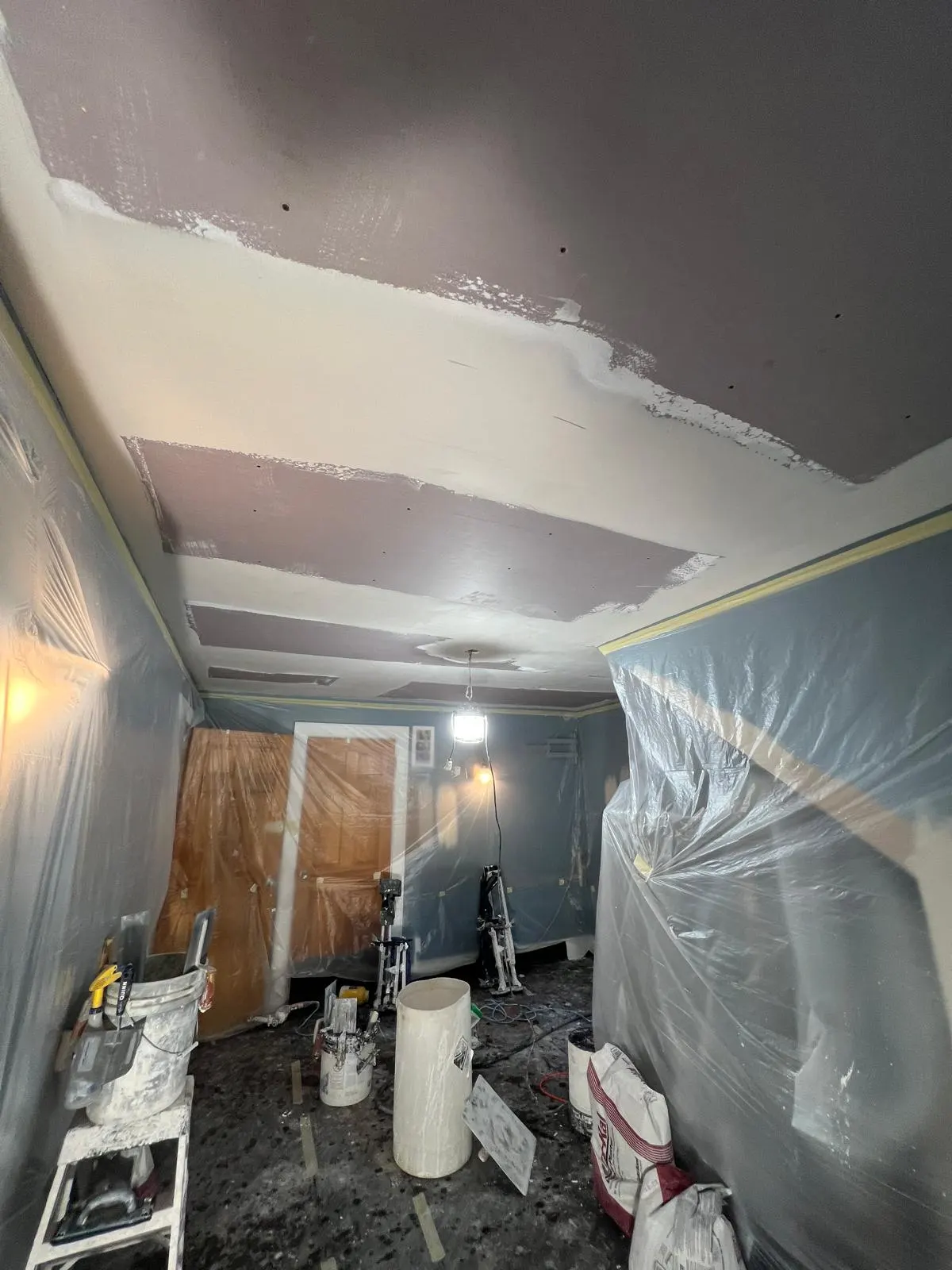
If your walls look rough, patchy, or dented no matter how many coats of paint you add, the problem is usually the surface underneath. That is where skim coating comes in.
Skim coating is the process of applying one or more thin layers of joint compound or plaster over an entire surface to make it smooth and uniform. It is one of the most common ways to bring older walls in Greater Boston back to a clean, paint-ready state without tearing anything out.
This guide explains what skim coating is, how it works, and the situations where a room really benefits from it.
What skim coating actually is
Skim coating means spreading a thin, even layer of compound across the whole wall or ceiling, rather than just filling a single hole. The layer is troweled on, allowed to dry, and sanded smooth, sometimes over two or three passes to get a flawless result.
The goal is a continuous, level surface with no visible patches, texture, or unevenness. Think of it as resurfacing the wall rather than repairing one spot.
Skim coating versus patching
Patching fixes a specific defect: a hole, a crack, a dent. Skim coating treats the entire surface so everything reads as one plane. The two are different tools for different jobs.
If you patch several spots on a wall and then paint, the patched areas can still telegraph through, showing up as slightly different textures under light. Skim coating the whole wall after patching is what makes those repairs disappear.
When a wall has too many repairs
Older homes accumulate repairs. Over the years a wall might collect nail holes, anchor holes, old patches, and small cracks from a dozen different projects. Individually, none is a big deal, but together they leave a surface that never looks quite right.
When a wall reaches that patchwork state, skim coating is often the most efficient fix. Instead of chasing each imperfection, one smooth coat unifies the whole surface.
Removing wallpaper or texture
Skim coating is the standard finish step after removing wallpaper. Stripping paper often leaves behind adhesive residue and torn surface paper, and a skim coat smooths all of that into a clean wall ready for paint.
It is also the go-to method for flattening textured walls and ceilings. If you want to move from a dated texture to a modern smooth finish, skim coating over the texture achieves that look without a full tear-out.
After drywall or plaster repair
When a damaged section of wall is repaired, the new patch and the old surface rarely match perfectly on their own. A skim coat over the repaired area, and often the surrounding wall, blends the new work into the old.
This matters a lot in older Cambridge and Somerville homes with plaster, where a fresh patch can look and feel different from the aged surface next to it. Skimming brings the whole surface into agreement.
Is skim coating worth it?
For a smooth, high-end finish, skim coating is usually well worth it. It is the difference between paint that highlights every flaw and paint that lays down evenly on a flawless wall. Good lighting is unforgiving, and a skimmed wall stands up to it.
Whether a room needs a full skim coat or just spot repairs depends on the condition of the walls. A quick in-person look is the best way to know, and a free estimate can tell you which approach makes sense for your space.
Frequently asked questions
- What is the difference between skim coating and plastering?
- Skim coating applies a thin surface layer to smooth an existing wall, while full plastering builds up the wall in layers over a base. Skim coating is essentially a light resurfacing, not a full plaster application.
- Do I need to skim coat the whole wall or just the patches?
- It depends. A few isolated patches can sometimes be blended locally, but if the wall has many repairs or you want a flawless finish, skim coating the entire surface gives the most uniform result.
- Can skim coating remove wall texture?
- Yes. Skim coating over a textured wall or ceiling is a common way to achieve a modern smooth finish without tearing the surface out, as long as the underlying surface is sound.
- How long does a skim coat take to dry?
- Each coat needs to dry before sanding and the next pass, and drying time depends on humidity and how thick the coat is. Plan for the surface to be worked over more than one day for a smooth multi-coat result.
Related services
Serving
Found this helpful? Make us a preferred source on Google.
Ready for an exact price?
Get a free, no-pressure in-home estimate. Real numbers for your home, not a phone guess.